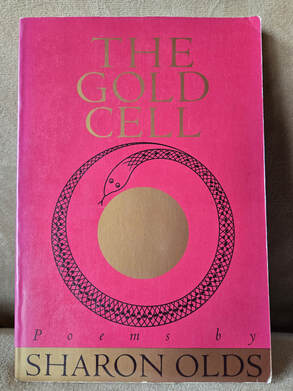
 For most of the past thirty years, I have taught a poem of yours titled “Late Poem to My Father,” which appears in your third collection, The Gold Cell. While other readers—and rightly so—have gravitated toward other poems in that collection, including “I Go Back to May 1937” and “On the Subway,” I continue to return to this poem.
Full disclosure: I heard you read from this book in October 1989, as your signature and date indicate inside the book I bought when you visited Austin Peay State University during my junior year. In the previous four semesters, I had attended my first poetry readings, each in its own way providing me with a larger understanding of the role of poetry within the life of an individual. That night you were serious and playful, what someone later would call sacred and profane, and having grown up in a Baptist church, I embraced the sacred but tried, of course, to avoid the profane. I remember, after the reading, saying something to you about how several of the poems you read traced time backwards. In one poem you named geological ages vertically down the edge of a cliff. In another poem, about your father, you flew across country to be at his bedside but then went backwards into his body back to before you were even born. The pattern happened enough times that it caught my attention, but also something about that desire to go backwards in time resonated with me and still does. In “Late Poem to My Father,” you go backwards, trying to imagine the life of your father not as the grown man he was when you were a child but, instead, as the child he once was in “unlit rooms,” “mov[ing] through the heavy air / in [his] physical beauty, a boy of seven” while his own father sat silent in front a hot fireplace. The scene is ominous, fraught, full of tension. Though not clearly stated in the poem, this boy appears to have suffered trauma which, later, as a man, he copes with by drinking an “oily medicine” and eventually dropping down unconscious. At the end of the poem, you say, “When I love you now, / I like to think I am giving my love / directly to the boy in the fiery room / as if it could reach him in time.” That “fiery room” is like a kiln in which “the mold by which [he is] made” hardens, except that, with love reaching him, perhaps he might be saved, rescued, preserved, formed in such a way that the "tiny bones inside his soul" don't become, as the poem says, "twisted in greenstick fractures." Such an interesting thought: his own child's parental love might extend back through time, creating a different mold than the one that ultimately shaped him. Yours was the first poem that gave me the thought of imagining a parent as the child the parent once was, the circumstances surrounding a parent’s formation. “Late Poem to My Father,” I dare say, has given some readers a way to forgive their own parents, to look upon them with tenderness, imagining earlier childhoods that shaped their own. I wonder if poetry can be a way to “go back” within time’s continuum to find a purer, more innocent, more loving reality, where the soul is not fractured, where we all might begin again—untainted, undaunted, reinvented, re-formed. Who, now, can any of us be, since it’s possible, despite the children we once were, to look through parental eyes at our own parent, thus to help heal the child inside that parent, the innocence that might still have time to mature into a whole new definition of time? Ever your fan... 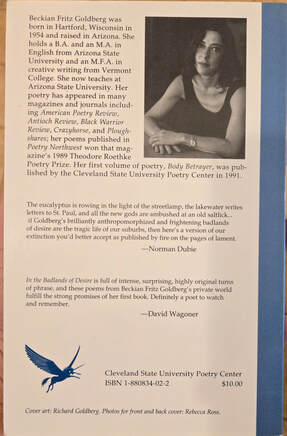 Your poem “If I Were in Beijing” was among the first poems that ever stopped me cold.
In fact, I still remember the day I read it in the office of my mentor David Till at Austin Peay State University in 1989. As co-editor of Zone 3, he took great pains to lay out each issue where the journal’s arc flowed seamlessly, thematically, holistically from poem to poem. Sometimes this process took him an inordinately long period of time, the managing editor ever pressuring him to give her the final copy. That’s why, when a particular poet pulled a two-page poem at the last minute (days or weeks before the journal was to be sent to the printer?), he was distraught. This two-page poem was the perfect lead-in to the journal’s feature section, a series of poems by Coleman Barks, and now, possibly, he would have to reorder everything. Then, in the way Till’s mind worked—sifting, parsing, mulling-over, making connections—he suddenly had a solution. He pulled me aside in the hallway and asked if I had been successful in publishing my poem titled “Good Boys” yet. He had remembered the poem from a batch I’d shared with him in some previous semester and wanted it for Zone 3. It wasn’t a two-pager, though, so he would still need one more page. He asked me to gather twenty pages or so and bring them to his office that afternoon. I sat there as he poured over my poems, reading each one like a monk studying some ancient text. An eyebrow would lift, a moment of recognition or insight. He nodded, titled his head, sighed audibly. I had no way of knowing what he was thinking, nor did he say. He continued reading, searching for that one poem to fill the desired page in the journal. That’s when I turned to a stack of submissions he hadn’t returned to the Zone 3 office yet. That’s where, in that half hour of watching my mentor decide on my own poems, I happened to pick up a submission of your poems and began reading to pass the time. When I read “If I Were in Beijing,” I immediately knew. I knew this poem was the poem, the one I needed to hear, to inhabit, to think through. Though I was an English major, I was a Marketing minor, already struggling to reconcile these two disparate parts of my brain. “I live in a fat country / with salesmen who do their own / commercials,” the poem began. Everything is marketing, ideas, propaganda, and these—unlike a tank—make the enemies, or terrors, we face that much more difficult to notice. I read the poem a second time. Then I read it a third time. I must have been doing my own David Till moment of living inside a poem, seeing it from every side, thinking through its music, its lines, its line-breaks, its logic, the leaps it makes, the argument unfolding. “Wow!” I finally said out loud. “This is the poem,” I said. “This is the poem, and it might be a two-pager, and if it is, toss my poem out and keep this one instead.” Till said he’d already been through those submissions and hadn’t found anything. “You missed this one,” I said, a confident twenty-one-year old telling my mentor he’d overlooked a real keeper. He set my stack of poems aside and said, “Read it to me,” so I did. IF I WERE IN BEIJING I live in a fat country with salesmen who do their own commercials, who don’t know what to do with their hands—hang, point, hitch a ride in the suit pocket. Usefulness is a bitter mystery. And it is such a simple country. Stars flag the sucked in black hills of night. Summer stops breathing when you listen. Or the stars are a thousand deer tails lifted and disappearing. You can sail down the tunnels of radios from opera to blues. We would each love a revolution. A better cause than just the old dying. A priest said to my husband the other day, “Frankly we’re all sick and tired of hearing about the holocaust.” I suppose he meant we must keep cruelty alive to understand it. Keep it personal. For him it’s Nicaragua. The abortions. His country where the souls of the unborn fester like sweet fruit we do not eat. If I were in Beijing I would be the student facing a tank. If I were in Russia I would be the poet in the gulag. If I were in Argentina I would be sewing the names of the disappeared into my shawl and wandering the plazas. But too often I am in my own childhood, its silent movies, its fish thrashings of light. Too often I am buried in the clover of the silence of my own house. I do not know how long it is before the dead stop counting. I hold my breath. Each heart must find the terror it can deny is like its own. That’s how your poem came to find a place next to my poem in the Fall 1989 issue of Zone 3. I’ve lived with your poem now for almost thirty-five years, counting it as one the most central poems of my earliest influences. I often wonder about the mystery of how one poem as opposed to another crosses our paths. Would I have found your poem if another poet hadn’t pulled a two-pager from Zone 3? What is our “usefulness” as poets? What does it mean that “[e]ach heart must find the terror / it can deny is like its own”? Is poetry a kind of “revolution” against “a fat country”—the America of 1989 or the America of 2024—and if it is, can we ever really know what we’re up against? How "simple" is our country now? In trying to answer these and other questions, at least your poem all these years has been a constant companion so that whatever I face, I feel even more bold than I felt as a twenty-one year old. Ever your fan... 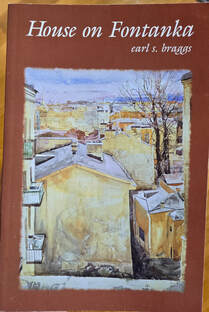 A poem of yours to which I’ve returned for many years is “This Yellow City” (from House of Fontanka). The poem begins as follows: Van Gogh could’ve been born here or Van Gogh could’ve lived here or Van Gogh could’ve died here but he didn’t and he didn’t and he did not stop here to paint this yellow city yellow. I suppose there’s no explaining why one poem versus another seems to stick in a reader’s mind (or what its presence sets in motion in that reader’s formation). I’ve always said that, as poets, we have to let matter what matters to the reader to whom it matters. In fact, I’m often surprised (or perplexed) by poems of my own that readers take to themselves. So be it, though. We can’t really influence, much less determine, which poems resonate with readers. "The Yellow City" is just one such poem of yours that I've taken to myself and lived with for many years. For me, I’m drawn to the speaker’s loneliness and wandering within a city not his own—that sense of displacement but also of connection. Maybe I, too, in my seeking after art, have this constant feeling of displacement and connection, and maybe that’s at least one reason I feel a kinship with this poem. I’m also drawn to the color yellow repeated so often throughout the poem, and I’m drawn to the poem’s use of repetition, a kind of music that both anchors the poem but also gives it a sense of soaring—a characteristic found throughout your work. Plus, what does it mean that Van Gogh didn’t “stretch his canvas here to paint this yellow city yellow”? What does it mean that he “could’ve”? Are there places in the world—even major cities like St. Petersburg—we will never experience in their fullness because we live in the absence of what someone’s art might have brought to our understanding of those places? Through whose revelatory, miraculous eyes have we not seen the world? Can part of our loneliness be traced to the poverty of perspectives we hold? Thank you for being one such perspective through whose eyes I get to think about existence. Without “This Yellow City,” I would not quite know myself in the same way. With “This Yellow City,” I carry a companion with me in my own wandering. I’m curious: is there a poem of yours which now, after many years, you reread and find important in ways that an earlier version of yourself overlooked as central to your emerging body of work? Is there a poem whose implications, especially after decades of writing poems, deepen in ways that now surprise you? Has the poem come alongside you, an unlikely companion, but one which, now, you can’t imagine not having nearby as you continue your walk? Ever your fan… 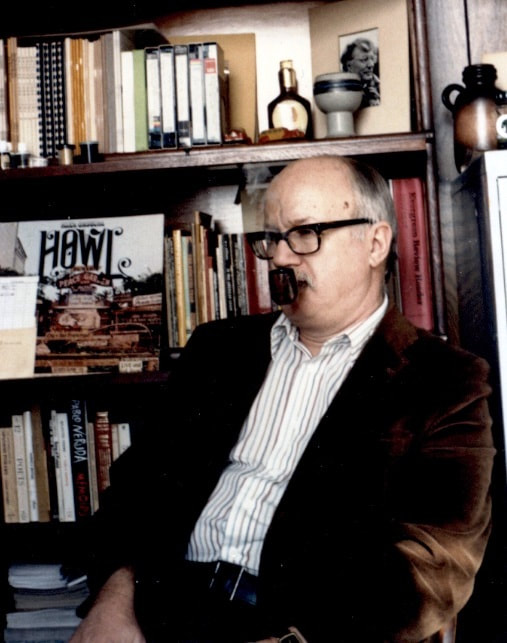 Dave Etter, the Spring 1987 visiting poet at Austin Peay State University, did not match any preconceived ideas I had regarding what a poet should look like or talk like. Approaching 60 at the time, Etter resembled a former linebacker—squat, husky, and gruff. In the author photo on the back of one of his countless books, he sat in a simple folding chair out in the yard, squinting into sunlight, a pipe in one hand and a glass of Jack Daniels in the other, the half empty/half full bottle on a table at his side. His was the first creative writing class I took as a beginning student. Back then we were on the quarter system (10 weeks), but those two and half months set a tone and an approach toward writing poems that remain part of my DNA. Etter expressed a genuine fascination with our attempts at poems and made writing them feel like the most ordinary thing one could do. For someone like me, coming from a small town in west Tennessee, I had never met a grown man who wrote poems until I stepped onto that campus. Etter was ordinary in the best sense of the word. He didn’t come across as an academic—just a man in love with the marvelous simplicities of existence and this gift of language that could be profound and quirky at the same time. His own poems explored the speech patterns, images, and interior lives of small town people—each a vignette that, taken together, approximated an investigation into the human psyche. Though not a formalist, his poems, at times, have reminded me of the tight, explosive poems of E. A. Robinson, another poet whose portrayals of individual lives have become central to my own. Etter gave himself fully to laughter, even in the middle of class, and found humor in the slightest turn of phrase. Our class sat around a conference table in an historic house—formerly the college President’s house—though by then the mansion housed the Honors program. We were a motley crew of misfits by comparison, a crowd of hoodlums mistakenly let into a museum. Informal and nonchalant, we erupted too often into laughter, and I imagined professors in their offices down the quiet hallways biding their time until the hoi polloi went on their way. Weeks into his term as visiting poet, he gave a poetry reading to a packed auditorium, and he even read a few of the poems he’d written during the preceding weeks, a couple of which he had shared with our class. He wasn’t just “the teacher,” but at all times he gave the impression that, like us, he was still a student, a participant in class, willing to write with us, willing to share new work alongside us. He made us think that the poem to be concerned with, the poem to be excited by, was not the one published somewhere in a literary journal or collection of poems but the poem before us at the moment, the newest work, the language just emerging. In that faculty reading, though, about half way through, out of nowhere he began talking about John Wayne, “the Duke,” the macho man of Westerns that had come to define what a man’s man looked like and sounded like. Then, for whatever reason—maybe for the novelty of it or for the laughs or maybe to make a point about masculinity—he began reading several poems in John Wayne’s voice. Perfect swagger, perfect pacing—a spot-on impersonation. One could imagine him sitting next to Johnny Carson, doing impersonations. The effect was dizzying, hilarious, and perplexing. Maybe the poems had more gravitas, each poem a fictional voice from a small-town life suddenly speaking with a recognizable, authoritative voice. Perhaps we were supposed to reconsider what manliness could sound like. In a letter once, Dave said that only real men wrote poetry and that all the twerps were in insurance and sales. He could be blunt like that, and one could never be certain if he was trying on a statement for the sound of it, to test how true or untrue it was, or whether he really meant the sentiment. Anyway, in addition to studying English, I also studied Marketing, but in the end I steered clear of that world. I gave myself fully to poetry. 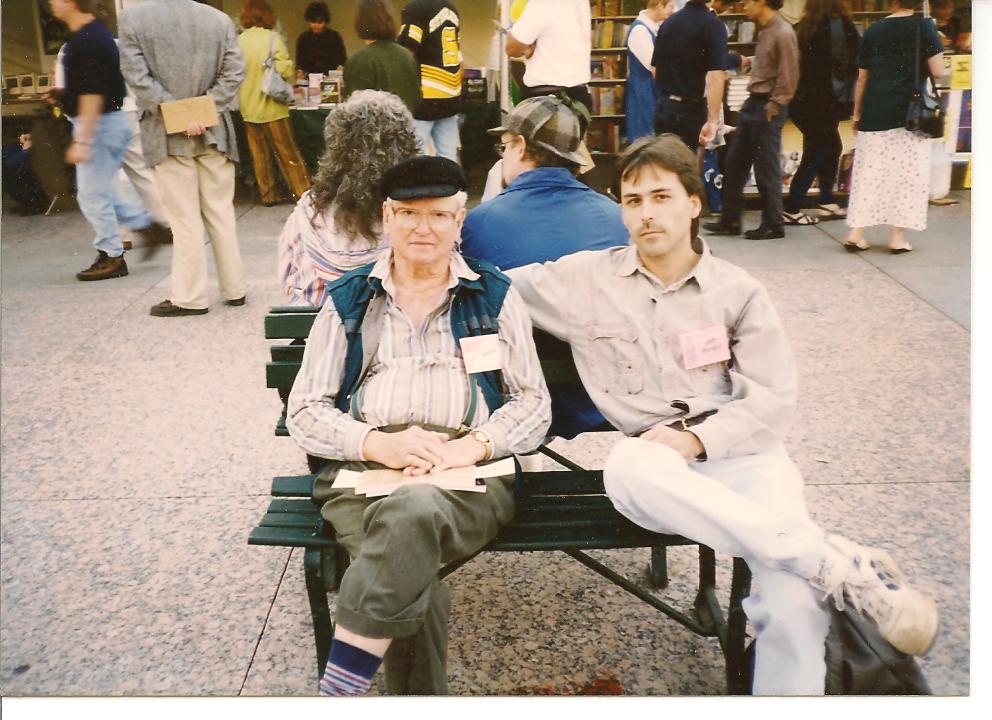 THE AUTHORIAL VOICE OF GEORGE SCARBROUGH I have heard poet George Scarbrough described as the best poet Tennessee ever produced. Such pronouncements are subjective, and I am in no position to prove or disprove such a claim. I can, however, claim that several of his poems are absolutely indispensable to my sense of poetry’s power, not the least of which is the title poem to his 1989 collection Invitation to Kim. When I arrived at Austin Peay State University in the fall of 1986, I had scarcely heard of any living poets, national or local, but through the pages of Zone 3, APSU’s newly-formed literary journal, I began to find poems that fueled my own imagination. One of those first poems belonged to George Scarbrough, a poet who lived in Oak Ridge and who, later, would become a friend. In the poem, “Schoolhouse Hill,” the speaker, which I take to be George, recounts the story of a girl who “traipsed townward / To steal the creams and sticks / She bought her friends with.” Scarbrough spends three stanzas painting a portrait of a young girl who “drifted about Benton” and who “flourished / In perfumes like bouquets,” only to turn in the last stanza to an indictment of himself: I stole too for my moment Of attractiveness. Pariah Of ordinary hours, I stuck To my desk at noontime, writing Papers for the less authorial, Great dumb brutes I loved. I can’t exactly explain why those words resonated for me when I read them more than 30 years ago. Perhaps the three hard stresses of “great dumb brutes” represented one kind of world to me while the speaker acknowledging that he “loved” these “brutes” represented another kind of world. I wasn’t a scholarly type, and I never wrote papers for anyone. If anything, at that time in my life I was struggling to write my own essays in college. I was the first person in my family to go to college—perhaps I counted myself as one of those “less authorial / Great dumb brutes.” Perhaps I was trying to move from being a brute to being someone who could learn to love. Perhaps, reading his words, I sensed that one part of myself was looking at another part of myself. In the early 1990s, while in graduate school at the University of Alabama, I practically read every new issue of the numerous literary journals in the periodicals section of the university’s library. I can still remember where I was standing when I read a handful of posthumous poems by Howard Nemerov, one of which, “Trying Conclusions,” ended with the following lines: What rational being, after seventy years, When scriptures says he’s running out of rope, Would want more of the only world he knows? No rational being, while he endures, Holds on to the inveterate infantile hope That the road ends but as the runway does. I can also remember standing there on the second floor, holding an issue of The Southern Review, reading a poem of George’s, at which point I suddenly slumped down in the middle of the floor, my back against the shelves, and I tried really hard not to lose my composure. “The Train” caught me off guard, in the way the best poems do. It didn’t just entertain me for a few lines; instead, it revealed something vital to me about the power reading had always had in my own life. THE TRAIN Tandem and straight we sat before the washstand reading, my literate mother and I, while my unhappy father scoffed at us from his bed, restlessly turning in a room so small he could have reached out and torn the books from our hands. “A man can’t sleep with the lamp lit,” he said. “Douse it. It’s late.” It was late. Eleven by the clock. We sat on oblivious of time. “You make,” he said, “a short train with two cars,” meaning the local that ran past our house. “It’ll get you nowhere,” not knowing it had already carried us past all the houses he knew. George grew up in a share-cropping family with an illiterate and hard-driving father, the likes of which—either rightly or wrongly—I came to imagine through Faulkner’s Abner Snopes in the short story “Barn Burning.” In much the same way that Sarty, Abner’s son, must find his own path in life and reject his father’s cruelty (among other things), George, too, had to forge toward his own world; and he did so through reading and writing poems, many of which explored empathetically the nature of his rural, poverty-stricken childhood. In this particular poem, I’ve always been drawn to how the poem portrays size, or scale, as a way to make an argument about the value of reading. Illiteracy is portrayed as occupying “a room so small,” one where both a washstand and a bed are present, indicative of the meager means the family must endure. Rest and enjoyment are pitted against one another, vying for the same small space. The father is exhausted—by exertion, by limited choices—but the mother and child, “oblivious of time,” occupy a larger space, one that is communal, not isolated, as the father appears to be within the family, “unhappy” and restless. One of the products of the father’s small conception of the world is a dismissive attitude that strikes out toward others. The speaker says of the father that “he could have / reached out and torn the books from our / hands.” He doesn’t “reach out” toward them in familial intimacy; he doesn’t “reach out” in recognition of his own need; nor does he “reach out” in empathy or understanding toward what he doesn’t know. Sadly, the smallness of the room seems to mirror the smallness of his imagination for dealing with what frustrates him, producing a response that is destructive instead of creative. The word “torn,” for instance, indicates a mindset accustomed to doing things by force, a mindset accustomed to what the body can make happen instead of what the mind can imagine possible. The small space the mother and son occupy contains an intimacy, though, as well as a vastness, that the father cannot enter. Not only does the father lash out physically—he also lashes out verbally, his words blunt and forceful. Of the light the mother and son read by, he states, “Douse it. It’s late.” The father’s concerns are of the body, not the mind, spirit, or imagination. One can imagine that, given his own limitations in life, his own labor netting him little to show for his exhaustion, he can’t really imagine another life. All he knows is hard labor. Sadly, the father fails to imagine how reading (and therefore education) will benefit his child. He demeans both mother and child, comparing them to a short train, and he says of reading, “It’ll/get you nowhere.” The train, though, changes everything. The train goes “past all the houses” and, by implication, suggests the larger world that lies beyond what the father can conceive. The act of reading therefore transforms “a room so small” into something even larger than “houses,” which the train then carries the speaker “past.” Where the father’s life is closed-in upon by his illiteracy, the son’s life seems boundless. While the father remains in a state of “not knowing,” the son enters into another realm altogether. Both space and time are enlarged, as is the self. Two or three years before George died, I visited him in Oak Ridge. I had been to his small home on Darwin Avenue only a handful of times in two decades, but I always enjoyed our visits, which could easily last half a day. Years earlier, in 1994, as I was moving books into my new office at my new position at Columbia State Community College, my secretary informed me, “You have a letter waiting for you.” The letter had arrived on campus even before I had, which seemed hilarious to everyone, and she had been holding it for me. The letter was from George. On that last visit, he told me to go through and pick out any books I wanted to take with me. I tried to refuse, saying that I thought he had planned to donate them to the University of the South’s library. He insisted that he was giving books to his friends and wanted me to find what I wanted. He even pulled a few items from his shelves and handed them to me, a book by Dylan Thomas and a 1st edition hardback copy of Wallace Stevens’s The Palm at the End of the Mind, among others. I told George that all I really wanted was the copy of the Southern Review that contained “The Train,” and I told him of the story of sitting on the floor of the library, trying not to cry, and of how crucial that poem had been for me. We looked and looked but never found that issue. One journal he did give me that day was the January 2002 issue of Poetry, containing three of his Han-Shan poems, part of a larger manuscript (Under the Lemon Tree) that wouldn’t appear for almost another decade. I asked George if he would mind inscribing something right there on page 199, just a few words that I could take with me. I keep that issue of Poetry in my office at Columbia State and often open it to read what George wrote to me, treasuring that moment I watched him write these words: How words have taken us past all the houses our fathers knew. George When I read those words in George’s shaky, near-illegible handwriting, I’m right back there in that university library again, slumped to the floor, reading and rereading a poem that continues to remind me of how large the act of reading has made my small, less authorial life and how—how else to say this?—I have felt love entering into my life, turning it, in sympathy, toward all I cannot—and may never—know. 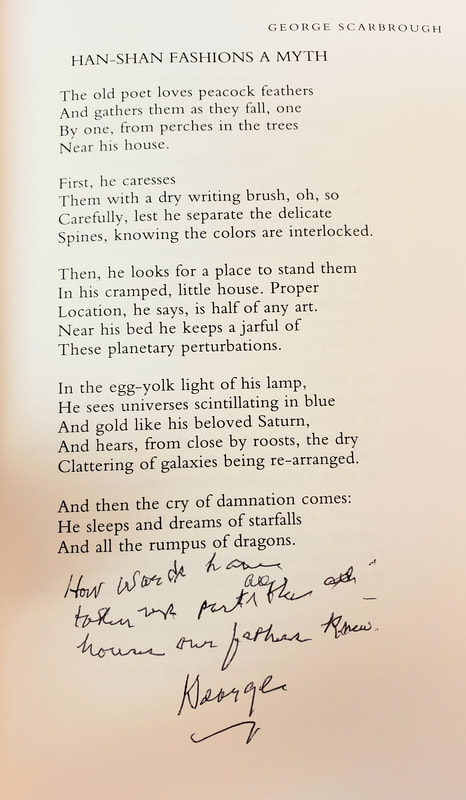 |
Jeff Hardin is professor of English at Columbia State Community College in Columbia, TN. He is the author of six collections of poetry, including Fall Sanctuary (Nicholas Roerich Prize, 2004), Notes for a Praise Book (Jacar Press, 2013), Restoring the Narrative (Donald Justice Poetry Prize, 2015), Small Revolution, No Other Kind of World (X. J. Kennedy Prize, 2017), and A Clearing Space in the Middle of Being.Categories
All
|
 RSS Feed
